
Track Days Are Fun Until Parts Fail
Motorsport riding is a rush, but it also pushes your motorcycle harder than normal street miles ever will. Heat builds fast, parts wear quicker, and small setup issues turn into big ones once you’re a few laps deep. The good news is that most track and race problems are common, easy to spot early, and very fixable if you act before something breaks. In this guide, we’ll walk through five issues we see all the time and the fixes that keep bikes safe and fast. Whether you ride track days, drag nights, or race weekends, these checks help you finish the day instead of loading up early. If you’d rather not guess, Precision Mobile Customs can inspect and repair your bike so it’s ready to run.
Brake Fade And Spongy Lever Under Heat
If your brake lever starts feeling soft, or you need more lever pull to slow down, you’re likely dealing with heat. On track, braking happens harder and more often, which raises pad and rotor temps and can boil old brake fluid. Boiled fluid makes tiny gas bubbles, and that’s what gives the “spongy” feel. Worn pads, glazed pads, or a caliper that isn’t sliding freely can make it worse.
What you’ll notice
- The lever gets soft after a few laps
- Braking power drops near the end of a session
- A sharp smell or smoke from the front end
Quick fixes and smart upgrades
- Bleed the system with fresh, high-temp fluid (DOT 4 or DOT 5.1—never mix with DOT 5 silicone).
- Check pad thickness and replace if they’re near the backing plate.
- Lightly scuff glazed pads and clean rotors with brake cleaner.
- Inspect rubber lines; if they balloon under pressure, swap to braided lines.
- Make sure caliper pistons move smoothly, and seals aren’t sticking.
A firm lever is safety. If brakes feel “off,” don’t ride it out—get it checked.
Overheating Engines From Hard Laps And Idling
Track bikes run hot. Long, wide-open pulls, high RPM, and short cool-down time can push temps past normal. Overheating can warp parts, thin oil, and lead to detonation (that harsh knocking sound under load). Sometimes it’s as simple as clogged radiator fins or low coolant. Other times it’s a fan not working, a thermostat stuck, or a fuel mix that’s too lean.
Signs to watch
- Temp light on, or gauge climbing fast
- Coolant smell, steam, or overflow bottle filling
- Power drops when the bike gets hot
Fixes you can do
- Clean radiator fins gently (bugs and rubber bits block airflow).
- Check the coolant level only when the bike is cool.
- Inspect hoses for soft spots, cracks, or leaks at clamps.
- Verify the fan comes on (if your bike uses one).
- Change oil more often; hot track use breaks it down quicker.
Track-friendly tips
- Many riders use distilled water with an approved additive where rules allow (some tracks don’t want glycol spills).
- Confirm your fuel and tune are safe; a lean tune runs hotter.
Overheating is one problem that can become a major repair fast, so it’s worth fixing early.
Chain And Sprocket Wear After Long Sessions
Chains take a beating in motorsport. Hard launches, quick downshifts, and constant load changes stretch a chain and chew sprockets. A dry chain heats up and wears even faster. Misalignment is another big one—if the rear wheel isn’t lined up, the chain runs at an angle and grinds away at both sprockets. This can also cause a tight spot that makes the bike feel jerky mid-corner.
Common signs
- Chain slack changes a lot as you rotate the wheel
- Clicking or grinding sounds
- Rear sprocket teeth look hooked or sharp
- The chain “snaps” when you get on/off the throttle
Fixes that work
- Set the chain slack to your bike’s spec, and check it at the tightest spot.
- Align the rear wheel using accurate marks or an alignment tool, not just “eyeballing.”
- Clean and lube after every track day (use chain lube that won’t fling everywhere).
- Replace the chain and sprockets as a set. Mixing a new chain with old sprockets shortens chain life.
Don’t forget the basics: torque the rear axle properly and re-check after the first session. A loose axle can ruin alignment in minutes.
Clutch Slip When Power Hits Mid-Corner Hard
Clutch slip often shows up after the bike is hot. You roll on the throttle, the RPM rises, but the speed doesn’t match. That’s lost drive—and lost lap time. On motorcycles, clutch slip can come from worn friction plates, weak springs, incorrect cable free play, or oil that’s not made for wet clutches. Track use also overheats plates, especially if you ride the clutch off the line or do repeated hard starts.
What it feels like
- RPM jumps under load in higher gears
- Burning smell after a session
- Clutch engagement point changes during the day
Simple checks
- Measure lever-free play. Too tight can keep the clutch slightly disengaged.
- Look for oil labeled JASO MA/MA2 (safe for wet clutches). Car oils with friction modifiers can cause slip.
- Inspect the cable for fraying or a sticky pull that prevents full engagement.
Real fixes
- Replace friction plates and springs if they’re worn or heat-spotted.
- Check steel plates for warping with a flat surface.
- Inspect the clutch basket for notches where plates grab; deep grooves can cause drag and an uneven feel.
A healthy clutch gives a clean drive out of turns. If it slips, fix it before it cooks the whole pack.
Electrical Gremlins That Kill Your Race Weekend
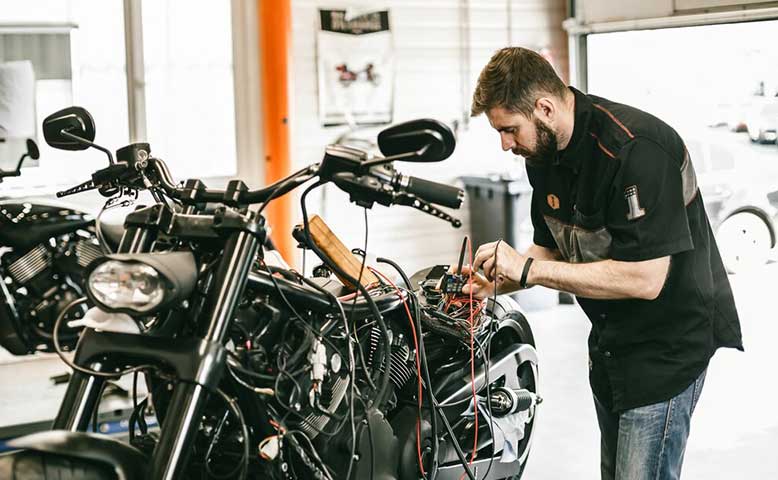
Electrical issues feel random, but most come from a few repeat causes: weak battery, loose grounds, bad connectors, charging system trouble, or wiring rubbed through on the frame. Track vibration makes small problems show up fast. One loose battery terminal can cause a no-start, misfire, or dashboard reset. A failing regulator/rectifier can overcharge or undercharge, leaving you stranded.
Red flags
- Bike starts fine cold, then won’t restart hot
- Dash flickers, lights dim, or gauges reset
- Misfire at high RPM that feels like fuel trouble
Best way to track it down
- Start with the battery: check terminal tightness and do a load test.
- Inspect the main ground cable and frame ground point for corrosion.
- Look at the charging voltage with a multimeter:
- Around 12.6V key off (healthy battery)
- Around 13.5–14.5V at idle to mid RPM (charging)
Fixes that hold up
- Clean connectors and lock them down so they can’t shake loose.
- Replace burned plugs instead of “wiggling” them back to life.
- Route and secure wiring away from sharp edges and heat.
Electrical problems can ruin a day fast. A quick pre-event check saves a lot of stress.
Keep Your Bike Ready For Every Weekend
Motorsport problems usually give hints before they turn into breakdowns: a softer brake lever, rising temps, a noisy chain, a slipping clutch, or a dash that flickers. Catching these early keeps riding safer and saves money on big repairs. If you want a bike that starts, stops, and runs the way it should, get it looked at before your next event. Call or message Precision Mobile Customs to book motorcycle repair and a track-ready inspection. Tell us how you ride, what bike you have, and your next ride date, and we’ll help you get sorted so you can focus on the track, not the tools.

